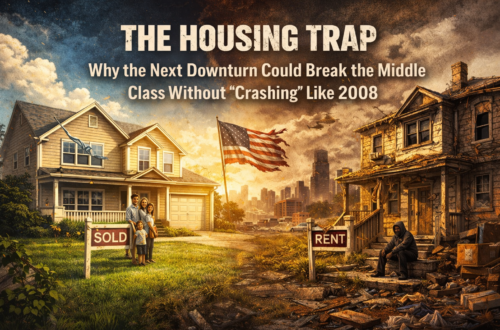
By Scott Randy Gerber | The Tipping Point
Introduction: History Doesn’t Repeat, But It Rhymes
Every major economic crisis leaves a trail of signals — patterns that only a small group notices in time. Before the Great Depression, those who paid attention to the warning signs didn’t just survive; many became generationally wealthy. Today, as structural cracks appear across markets, smart investors are again watching closely.
This article breaks down exactly what the smart money did before the 1929 crash, who prospered, and how modern investors can prepare for a similar economic shift.
The Warning Signs Before the Crash — And the Few Who Saw Them
1. Rampant Speculation and Margin Trading
By late 1928 and early 1929, markets were in a frenzy. Everyday Americans were borrowing huge sums to buy stocks on margin.
Smart money saw danger where others saw opportunity.
What they did:
- Reduced exposure to overinflated equities
- Increased liquidity
- Avoided momentum-driven speculative plays
Who benefited:
Joseph P. Kennedy Sr., one of the most famous examples, exited the market after realizing the euphoria was unsustainable. He preserved capital, then reinvested at the bottom — becoming enormously wealthy.
2. Rotation Into Hard Assets
While the average investor believed stocks “could only go up,” seasoned insiders understood that extreme optimism often precedes a collapse.
What they did:
- Moved capital into gold, real estate, cash, and Treasury bonds
- Prepared dry powder to deploy once prices tanked
Why it worked:
Those assets held value or recovered faster than equities, giving smart investors the ability to buy distressed assets for pennies on the dollar.
3. Watching the Credit Markets — Not the Headlines
In 1929, credit markets tightened months before the crash. Borrowing slowed. Bank lending became cautious.
What they did:
- Followed the bond market instead of the stock market
- Interpreted shrinking liquidity as a red flag
- Recognized that the financial system was choking long before stocks reacted
Modern parallel:
Credit is tightening again today. Consumer debt is growing. Bank delinquencies are quietly rising.
History’s soundtrack is playing again — loudly.
4. Protecting Cash Flow Above Everything Else
When unemployment skyrocketed during the Depression, those who relied solely on market speculation were wiped out. But investors with strong, independent cash flow survived.
Smart money strategy:
- Invested in cash-flowing businesses
- Acquired income-producing real estate
- Avoided unnecessary debt
- Reinforced emergency reserves
Cash flow wasn’t just a strategy — it was medicine.
5. Buying When Blood Hit the Streets
After the crash, the panic sellers became prey. Those who had preserved liquidity stepped in quietly and patiently.
Who prospered:
- J.P. Morgan partners who purchased discounted blue chips
- Rockefeller family investments across infrastructure and finance
- Countless lesser-known but savvy investors who bought distressed property and businesses
The playbook was simple:
Preserve capital → Wait for capitulation → Buy undervalued assets → Hold long-term.
What This Means for Today: The Smart Money Playbook for What’s Coming
1. Get Out of Overinflated Assets
If it looks irrational… it probably is.
Today’s market has:
- Overpriced tech
- Record consumer debt
- Fragile credit conditions
- Government spending at historic highs
Reducing risk now protects opportunity later.
2. Increase Liquidity
Cash is not trash in volatile cycles — it’s ammunition.
The wealthy are preparing to buy, not panic sell.
3. Own Assets With Intrinsic Value
Just like pre-1930, look toward:
- Real estate with strong local demand
- Precious metals
- Commodities
- Profitable small businesses
- Cash-flowing rentals
- Defensive stocks (utilities, groceries, energy infrastructure)
4. Master the Skill of Timing, Not Prediction
Smart money doesn’t try to guess the day of the crash — they prepare for the inevitability of corrections.
A disciplined plan beats forecasting.
5. Build and Protect Cash Flow
Recessions destroy leveraged speculation but reward:
- Investors with multiple income streams
- Business owners with low debt
- Traders with strict risk management
- Real estate investors with stable renters
The Big Truth: Wealth Transfers, It Doesn’t Disappear
The Great Depression didn’t erase wealth — it redistributed it.
The unprepared lost everything.
The prepared built legacies.
We are entering a similar cycle.
History is shining a spotlight for anyone willing to look.
Final Thoughts: What Smart People Should Do Right Now
If you’re reading this, you’re already ahead of most. Preparation isn’t fear — it’s strategy.
And as the world edges toward uncertainty, remember:
The future belongs to those who stay calm, stay liquid, and stay intentional.
Smart money isn’t lucky.
Smart money is patient.