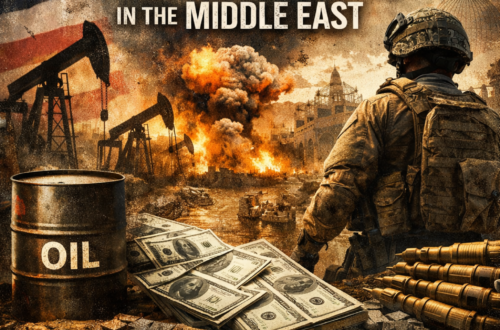
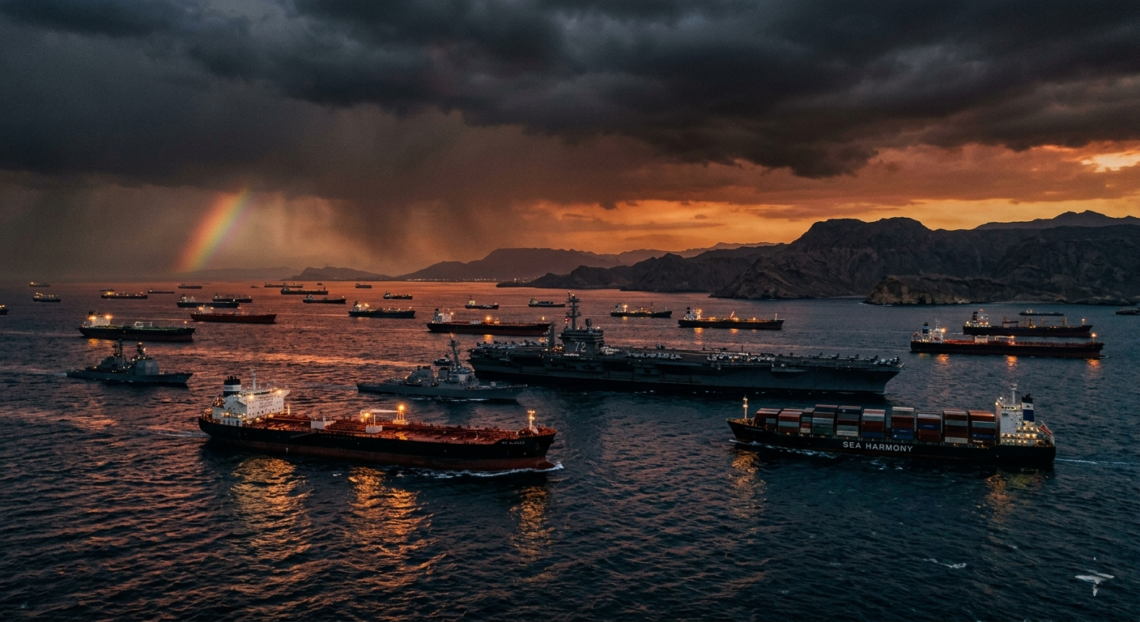
The announcement of a potential U.S. blockade in the Strait of Hormuz has sparked intense reactions—and for good reason. This narrow waterway is one of the most strategically vital نقاط on Earth, carrying a significant portion of the world’s oil supply. Any military action there is not just regional; it is global in consequence.
Supporters of the move argue that it is a necessary response to ongoing instability in the region, particularly involving Iran. From this perspective, a strong show of force is meant to deter further aggression, protect shipping lanes, and ensure the free flow of commerce. The logic is familiar: strength prevents larger conflicts, and failing to act decisively could invite greater challenges later. Some also frame the blockade as a form of pressure short of full-scale war—an attempt to force compliance without resorting to widespread military conflict.
These arguments are not without merit. The Strait of Hormuz has long been a flashpoint, and ensuring safe passage for global trade is a legitimate strategic concern. No major power can ignore threats to such a critical artery of the global economy.
However, the risks of this approach are profound—and potentially far-reaching.
A blockade, by its very nature, is not a neutral or purely defensive act. Historically and legally, it is widely viewed as an act of war. Even if framed as a limited or targeted operation, the reality is far more complicated. The strait is heavily trafficked by vessels from all over the world, including neutral and allied nations. Interfering with that traffic introduces immediate friction, and in such a tense environment, even a small miscalculation could trigger a much larger confrontation.
Beyond the military risks, the economic consequences could be severe. Disruptions in the Strait of Hormuz do not stay contained—they ripple outward, affecting energy prices, global markets, and economic stability worldwide. Even the perception of danger in the region can drive volatility. In that sense, a blockade does not simply pressure one country; it places strain on the entire international system.
There is also the question of strategic alignment. While the United States may view this as a necessary step, allies and partners may see it differently—especially if their own energy security and economic stability are put at risk. Actions intended to isolate an adversary can, under certain conditions, create hesitation or distance among allies instead.
Perhaps the most significant concern is the problem of escalation. Military actions, once initiated, are not always easy to control. A blockade requires enforcement. Enforcement creates encounters. And encounters, particularly in a crowded and contested space, carry the constant risk of misinterpretation or error. History shows that larger conflicts often emerge not from deliberate decisions to go to war, but from a chain of reactions that spiral beyond anyone’s initial intent.
None of this means that doing nothing is a viable option. The challenges in the region are real, and the protection of global trade routes is a legitimate priority. But the question is not whether to act—it is how to act in a way that reduces risk rather than amplifies it.
A blockade of the Strait of Hormuz may project strength, but it also concentrates an extraordinary amount of danger in one of the world’s most sensitive geopolitical chokepoints. Even if the objective is deterrence, the margin for error is extremely small, and the consequences of miscalculation could extend far beyond the region.
In the end, this is not a question of choosing between strength and weakness. It is a question of judgment. And in a place where so much of the world’s stability passes through a single narrow channel, the cost of getting that judgment wrong could be immense.
Article written by Scott Randy Gerber for The Tipping Point Tampa Bay © 2026 All Rights Reserved