The Petrodollar System: How Oil Built Global Power
To understand modern Middle East conflict, you have to go back to 1945.
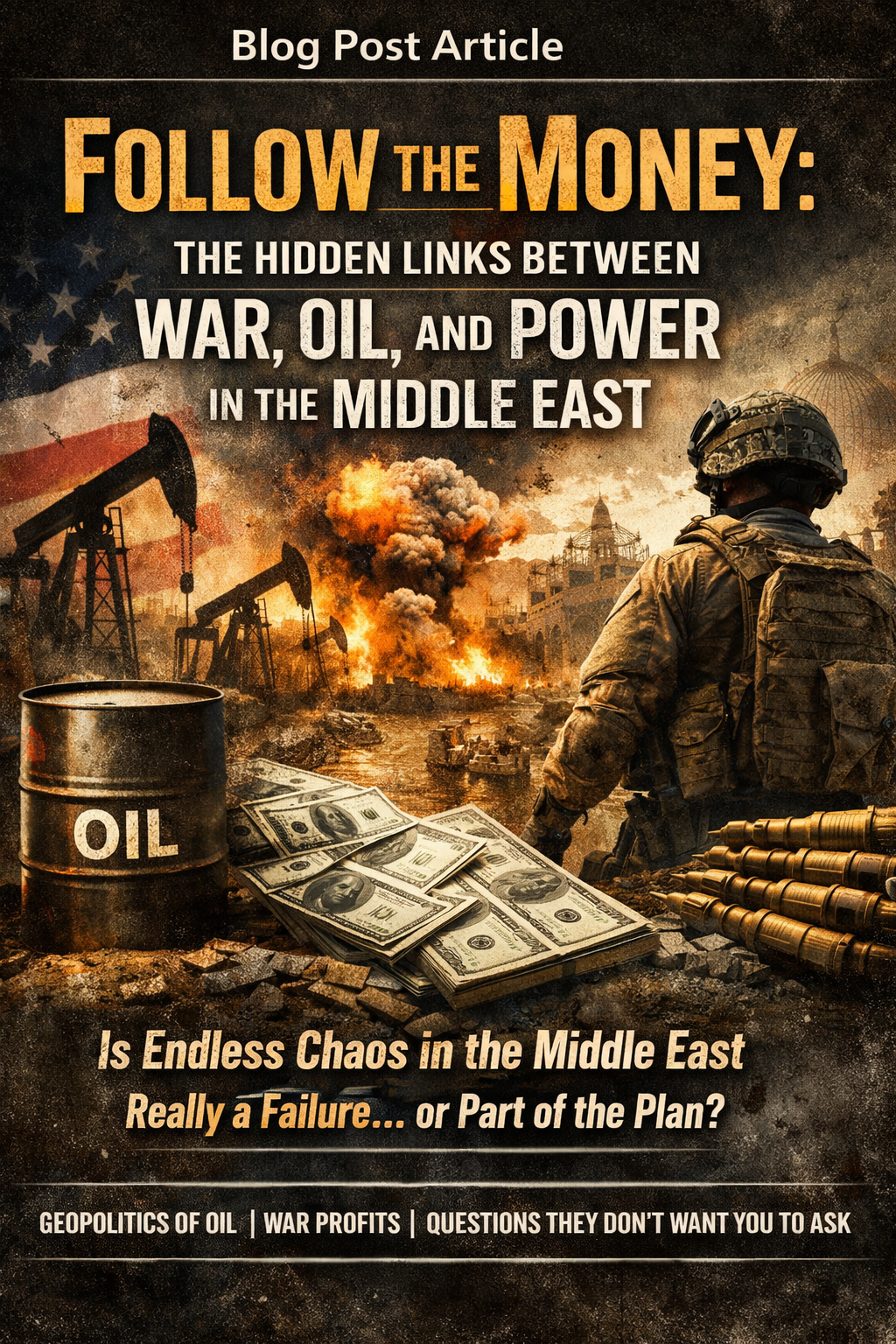
After World War II, the United States formed a strategic alliance with Saudi Arabia—security in exchange for stable oil access. Over time, this relationship helped establish what is now known as the petrodollar system.
Here’s how it works:
- Oil is the world’s most critical resource
- Oil is priced in U.S. dollars
- Every country must hold dollars to buy oil
This system drives:
- Global demand for the U.S. dollar
- Investment into U.S. markets
- Long-term economic influence
In simple terms: energy fuels power—and the dollar sits at the center of it.
What Happens When Countries Challenge the System?
Throughout history, some nations have attempted to take greater control of their oil or move away from dollar-based trade.
The outcomes? Often unstable.
- Iran (1950s): Oil nationalization followed by foreign-backed political upheaval
- Iraq (early 2000s): Shift toward euro-based oil sales before U.S. invasion
- Libya (2010s): Explored alternative monetary systems before collapse during regional conflict
Each case is complex. No single explanation tells the full story.
But when similar patterns emerge, it raises an important question:
Are these isolated events—or part of a larger geopolitical reality?
The Economics of War: Who Really Profits?
War is often framed as political or ideological.
But it also has a powerful economic dimension.
During times of conflict:
- Defense spending increases
- Weapons demand surges
- Military contracts expand
This creates significant financial growth in defense-related sectors.
Meanwhile, peace tends to reduce urgency—and spending.
That doesn’t mean wars are driven purely by profit.
But it does highlight something critical:
Conflict and economic gain are often connected.
Why the Middle East Remains Strategically Critical
The Middle East is not just another region—it’s a global centerpiece.
It controls:
- A significant portion of the world’s oil supply
- Key shipping and trade routes
- Strategic military positioning
This makes it a focal point not just for the United States, but for global powers competing for influence.
Which leads to a deeper question:
Can lasting peace exist in a region that holds so much strategic value?
Failure… or a System That Benefits from Instability?
After decades of intervention, policy shifts, and global involvement, one thing remains consistent:
Instability.
So it’s worth asking:
Is this repeated outcome simply the result of failed policy?
Or does ongoing instability sometimes align with broader strategic and economic interests?
Not as a conspiracy.
But as a matter of incentives.
When you connect the dots…
when you follow the money…
you begin to see that global conflict isn’t just about ideology or diplomacy.
It’s about power.
It’s about resources.
And yes—it’s about money.
And in the end, it’s often ordinary people—and the next generation—who pay the price.
Article written by Scott Randy Gerber for The Tipping Point Tampa Bay Podcast © 2026 All Rights Reserved. The Tipping Point Tampa Bay is owned and operated by Phillips Multimedia a division of Gerber International Holdings.